
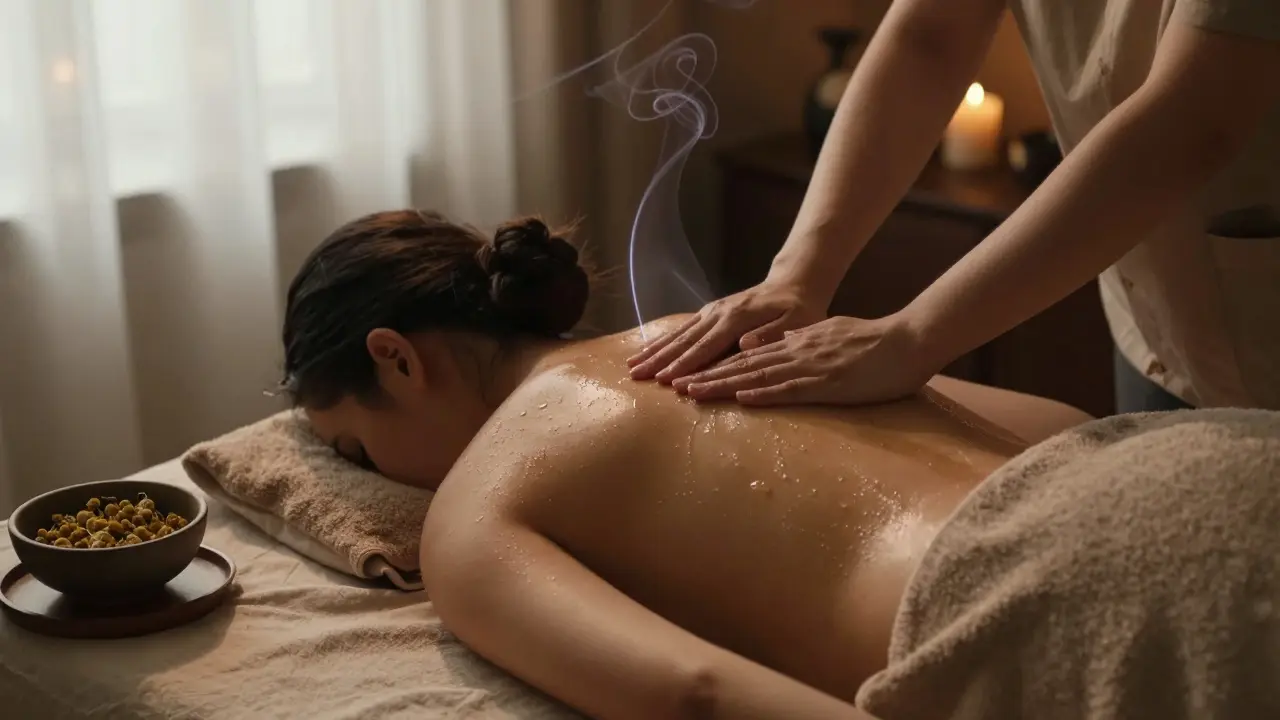
You know that feeling after a long day-shoulders tight, mind racing, like your brain won’t shut off even when your body’s begging for sleep? Now imagine sinking into a quiet room, warm oil on your skin, hands moving just right, and for the first time in hours, your breath slows down. Not because you’re trying. Because your body finally lets go.
What Relax Massage Actually Does to Your Mind
Relax massage isn’t just about sore muscles. It’s a direct line to your nervous system. When a therapist applies steady, rhythmic pressure-especially with techniques like Swedish or aromatherapy massage-they’re not just kneading your back. They’re sending signals to your brain that say: It’s safe now.
That’s not poetic fluff. It’s biology. A 2023 study from the Journal of Clinical Psychiatry found that just 60 minutes of regular relax massage lowered cortisol levels by an average of 31%. Cortisol isn’t just your stress hormone-it’s the chemical that keeps your heart racing, your jaw clenched, and your thoughts spinning. When it drops, your body shifts from fight-or-flight into rest-and-digest mode. That’s when your parasympathetic nervous system kicks in. And that’s when real emotional healing begins.
Think of it like hitting a reset button on your emotional battery. You don’t need to talk about your problems. You don’t need to meditate for an hour. You just need someone to hold you gently-and let your body remember what calm feels like.
Why Relax Massage Works Better Than You Think
Most people think massage is for athletes or people with back pain. But the real magic happens in the quiet moments after the session ends. That stillness? That’s when your brain starts processing emotions you’ve been pushing down.
People report crying during or after a relax massage-not because something tragic happened, but because they finally felt safe enough to let go. One client, Maria, told us she hadn’t cried in three years after her divorce. Then, during a shoulder massage, she just started weeping. "I didn’t even know I was holding onto that much pain," she said.
That’s not unusual. Research from the University of Miami’s Touch Research Institute shows that regular massage increases serotonin and dopamine by up to 28%-the same neurotransmitters targeted by antidepressants. And unlike pills, massage doesn’t come with side effects. It doesn’t numb you. It helps you feel again.
And here’s the kicker: you don’t need to go weekly to feel the difference. Even one session a month can reduce anxiety symptoms by 40%, according to a 2024 meta-analysis in Complementary Therapies in Clinical Practice. That’s like getting a monthly emotional tune-up.
Types of Relax Massage That Help Emotional Health
Not all massages are created equal when it comes to emotional well-being. Here are the three most effective types:
- Swedish Massage: Long, flowing strokes that calm the nervous system. Ideal if you’re overwhelmed, anxious, or just need to slow down.
- Aromatherapy Massage: Uses essential oils like lavender, bergamot, or chamomile. These scents directly stimulate the limbic system-the part of your brain that controls mood and memory. Lavender alone has been shown to reduce heart rate and blood pressure within minutes.
- Thai Massage: Combines gentle stretching with pressure points. Great for people who carry stress in their hips and chest. It releases physical tension that’s tied to emotional suppression.
Avoid deep tissue or sports massage if your goal is emotional release. Those are meant for injury recovery or athletic performance. You want soft, rhythmic, predictable pressure-not intensity.
What Happens During a Relax Massage Session
Here’s what you can expect if you walk into a quiet studio on a Tuesday afternoon:
- You’ll be asked to fill out a quick form-nothing medical, just questions like "How are you feeling emotionally today?" and "Any areas you’d like extra attention on?"
- You’ll be guided to a softly lit room with warm towels and maybe the scent of lavender in the air.
- The therapist will leave while you undress and get under the blanket. No awkwardness. No pressure.
- They’ll start with your back, using slow, gliding strokes. No sudden movements. No music with beats. Just ambient sounds-maybe rain or a distant chime.
- After 20 minutes, they’ll move to your legs, then arms, then neck. If you’re tense, they’ll pause and wait. They’re not trying to "fix" you. They’re just holding space.
- At the end, they’ll leave you alone for five minutes with a warm tea. No talking. Just breathing.
That’s it. No sales pitch. No upsells. Just quiet, intentional care.

How to Find the Right Relax Massage Experience
Not every spa is built for emotional healing. Look for these signs:
- The website mentions "stress relief," "emotional release," or "mind-body balance"-not just "luxury" or "romantic getaway."
- Therapists have certifications in therapeutic massage or somatic therapy-not just "basic relaxation."
- They offer a pre-session check-in. You should feel heard before you even lie down.
- They don’t push for 90-minute packages. Real emotional work doesn’t need to be rushed.
In Paris, places like La Maison du Calme in Le Marais or Zenith Spa in Saint-Germain focus on this kind of work. They don’t advertise on Instagram with candlelit photos. They’re quiet. They’re consistent. And they’ve helped hundreds of people just like you.
Cost and Booking: What You Should Pay
Don’t fall for the $200 "luxury" massage that feels like a factory line. A good relax massage session in Paris costs between €60 and €90 for 60 minutes. Anything under €50? You’re likely getting a student or rushed session. Anything over €120? You’re paying for the location, not the therapy.
Book online, but call ahead. Ask: "Do you focus on emotional relaxation, or is this more about physical relief?" If they hesitate, keep looking. The right therapist will say yes-and maybe even ask how you’ve been feeling lately.
What to Avoid
Some things sabotage emotional release:
- Music with lyrics or heavy beats-it keeps your brain alert.
- Therapists who talk too much. Silence is part of the healing.
- Being rushed. If they’re already pulling the blanket off before you’ve had five minutes to sit up, walk out.
- Expecting instant life changes. One massage won’t fix depression. But it can give you the breathing room to start healing.

Relax Massage vs. Therapy: What’s the Difference?
| Aspect | Relax Massage | Talk Therapy |
|---|---|---|
| Primary Focus | Physical release to trigger emotional calm | Verbal processing of thoughts and feelings |
| Time to Feel Relief | During or immediately after session | Weeks or months of consistent sessions |
| Best For | Chronic stress, burnout, emotional numbness | Anxiety disorders, trauma, deep-seated patterns |
| Cost (per session) | €60-€90 | €80-€150 |
| Requires Talking? | No | Yes |
You don’t have to choose one over the other. Many people use massage to soften their edges so therapy becomes easier. Others use therapy to understand why they hold tension-and massage to release it.
Frequently Asked Questions
Can relax massage help with anxiety?
Yes. Multiple studies show that regular relax massage reduces symptoms of generalized anxiety disorder. It lowers cortisol, increases serotonin, and helps reset your nervous system. It’s not a cure, but it’s one of the most effective non-medical tools for managing daily anxiety.
Is it okay to cry during a massage?
Absolutely. Emotional release during massage is common-and healthy. Therapists trained in somatic work expect it. They’ll hand you a tissue, turn down the lights, and give you space. There’s no shame in it. Your body was holding onto something you didn’t even realize.
How often should I get a relax massage for emotional well-being?
Once a month is enough to maintain emotional balance. If you’re going through a rough patch-breakup, job loss, grief-every two weeks helps. After three months, most people notice they handle stress better, sleep deeper, and feel less reactive.
Do I need to talk about my feelings during the massage?
No. In fact, most effective relax massages happen in silence. The goal is to let your body process emotions without the pressure of explaining them. If you want to talk, that’s fine-but only if it feels natural. The massage works whether you speak or not.
Can relax massage replace therapy?
No. Massage supports emotional health but doesn’t replace clinical therapy for trauma, depression, or diagnosed disorders. Think of it as a companion-not a substitute. Many therapists actually recommend massage as part of a holistic treatment plan.
Ready to Feel Lighter?
You don’t need to fix everything to deserve peace. Sometimes, all you need is an hour-quiet hands, warm oil, and permission to let go. If you’ve been carrying stress like a second skin, it’s time to put it down. Not tomorrow. Not next week. Now.
Book your first session. Let your body remember what calm feels like. You’ve earned it.





Alex Alcantar
December 29, 2025 AT 14:02I got my first relax massage last month after a breakup and honestly I didn’t think it would do anything but my shoulders unlocked and I cried like a baby in the middle of it
Will Sophia
December 31, 2025 AT 12:39This is one of the most well-researched, grounded pieces I’ve read on emotional release through touch. The cortisol stats are solid, and the distinction between Swedish and deep tissue is critical-so many people waste money on the wrong kind. Also, the part about silence being part of the healing? Chef’s kiss. I’ve been recommending this to every burned-out colleague I know.
Jacqueline Arnold
January 1, 2026 AT 07:34Ohhh so THAT’S why I started sobbing during my last massage?? I thought I was just emotionally weak… not that there’s anything wrong with that, mind you, but I assumed it was a personal failure, not a biological reset?? Wow. So the therapist just handed me a tissue and kept going?? No awkward small talk?? No ‘are you okay?’?? That’s… actually kind of beautiful. I’m booking one this week. And yes, I’m crying now. Again.
Ayush Pandey
January 2, 2026 AT 14:10You people treat massage like some mystical cure-all while ignoring the structural rot in your lives. You work 80-hour weeks, drink caffeine like water, scroll until 2 a.m., then think a €70 oil rub will fix your existential dread? The system broke you-massage just gives you a temporary dopamine patch. Real healing means quitting the job, leaving the city, stopping the performance. But no, let’s buy a spa package and call it self-care. Pathetic.
Chris Ybarra
January 2, 2026 AT 14:20Bro. I got a massage after my dad died. I didn’t cry. I screamed. Like, full-on, guttural, ‘why is the world so cruel’ scream. The therapist didn’t flinch. She just turned off the rain sounds and played soft Tibetan bowls. For 10 minutes. No words. Just presence. That hour was the first time I felt human since the funeral. I didn’t heal. But I remembered how to breathe. And now? I get one every two weeks. Not because I’m broken. Because I’m alive. And I refuse to let the world make me numb.